PISTACHIO BUYING GUIDE
Iranian Pistachio Buying Guide: Sizes, Splits and Quality
A wholesale buyer’s guide to Iranian pistachio varieties, size counts, shell splits, quality checks, batch traceability and packaging.
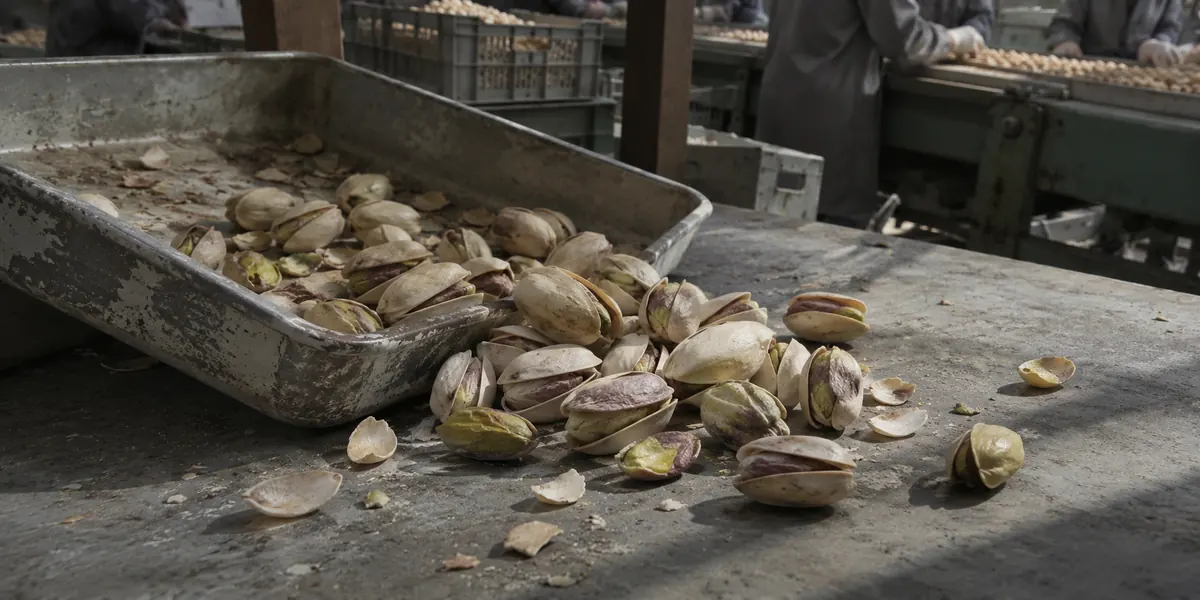
Choose the format around how the pistachios will be sold
A wholesale pistachio order starts with the final product. A snack brand buying roasted in-shell nuts may prioritize easy opening and consistent presentation. A bakery buying shelled kernels may care more about usable yield, color and piece size. Write the intended use into the inquiry so the supplier can propose a format against the same goal.
Specify raw, roasted or seasoned product and say whether you want in-shell nuts, whole kernels or pieces. For seasoned products, ask for the ingredient declaration and an approval sample. Include whether the order will be repacked or sold in the original pack. The choice affects the specifications you need to review and who is responsible for the finished presentation.
Use variety names together with physical specifications
Commercial names such as Akbari, Ahmad Aghaei and Fandoghi help narrow a discussion about Iranian pistachios. Buyers should still define the physical traits their channel needs. Ask for a named variety or agreed blend, representative photos and a batch sample. A variety name alone leaves room for differences in size, sorting and processing.
For a premium in-shell pack, decide how much visible variation your customers will accept. For industrial kernels, define what proportion of whole kernels and pieces the process can use. Include any color or appearance criteria your team can assess consistently. When visual judgments matter, keep a labelled reference sample and describe the characteristics it illustrates.
Understand size counts and shell opening
Ask what unit the size count uses and how the sample is drawn. With a count per ounce, fewer nuts generally indicate a larger average nut within that format. A commercial count range is useful only if both parties use the same weighing and counting procedure. It does not automatically match a grade described using a screen measurement. The USDA in-shell standards, for example, include size criteria that refer to a round-hole screen.
Clarify whether the offer is naturally split, artificially opened or an agreed mix. USDA grades distinguish artificially opened pistachios from other in-shell categories. If the distinction matters to your product, put it in the written specification and agree how it will be checked. Also define the treatment of closed shells, blanks and loose kernels so there is a clear basis for comparing samples.
Agree how visible defects and usable yield will be assessed
Ask your quality team to define the defect categories it uses and the limits for each one. Examples include shell staining, shell fragments, damaged kernels and foreign material. Specify whether results are recorded by count or by weight. Inconsistent denominators can make two reports look comparable when they measure different things.
Evaluate yield in a form relevant to your product. An in-shell buyer supplying a snack line may track the share of saleable nuts. A kernel buyer may measure how much of a sample survives sorting into the size categories the recipe uses. If 10 kilograms purchased yields 8 kilograms suitable for a particular line, divide the quoted cost by those 8 usable kilograms to compare the input cost for that line. This example illustrates the method rather than a target yield.
Treat food safety and lot records as separate acceptance criteria
Visual sorting and tasting address some quality questions. Your food safety team needs its own acceptance criteria and evidence. Aflatoxin is a specific concern for tree nuts, and destination requirements can depend on origin and the product's intended use. Confirm the applicable limits, sampling and documentation with the parties responsible for the proposed import before agreeing to dispatch.
Ask which lot a laboratory report covers and who collected the sample. Keep the report linked to the actual shipment identifiers. When multiple production lots are proposed, clarify which documents apply to each one. Also ask your team which other tests or records are necessary for the chosen format and market. Avoid relying on a generic claim that a product is “export quality.”
Review processing and packing together
Ask when the proposed lot was processed and what conditions apply during storage and transport. For roasted or flavored goods, agree the processing description and obtain a representative finished sample. For retail packing, confirm the package size, sealing, artwork and responsibility for label approval. If you are buying bulk packs for repacking, confirm pack weights and how the inner liner protects the contents during the proposed route.
Get a packing example before approving a large run. Check whether the lot code and other required information remain easy to identify on both the inner pack and outer carton. Also discuss how the team will record damaged seals or unreadable codes. Those checks help your warehouse decide which cartons can be accepted into stock.
Compare samples under the same conditions
Use a consistent procedure for comparing proposals. Record the sample date, supplier reference and product form. Compare like with like, especially when two samples differ in roast, seasoning or age. Give the quality team criteria for appearance, texture and odor and record any questions about lot representation separately.
Decide which observations must be repeated on receipt. A strong approval record names the sample, the criteria used and the limits the shipment will need to meet. If the supplier expects to substitute a variety, size or packing format, require a fresh review before dispatch. This keeps the original approval tied to the product your team evaluated.
For a first delivery, agree who will open the cartons and how they will choose units to inspect. Record the carton identifiers and the inspection conditions alongside the results. This makes it easier to investigate differences between the approved sample and the delivered stock without losing track of which packs were examined.
When several pack sizes arrive together, record the results for each format separately. A packaging defect in one format may require a different decision from a lot-wide quality finding.
Prepare a wholesale pistachio inquiry
Send the intended use, variety or acceptable alternatives, in-shell or kernel format, size definition, processing and approximate order quantity. Add the destination, preferred pack size, traceability requirements and sample review plan. Include quality limits and the documentary checks your team expects to complete.
Compare quotes only after confirming they cover the same format and level of sorting. Include freight and packing assumptions and estimate usable yield if it affects your application. For repeat purchases, carry the approved specification forward and ask for evidence tied to each new lot. That gives you a consistent basis for managing quality across shipments and makes changes visible before they reach your warehouse.