SAFFRON BUYING GUIDE
Saffron Buying Guide: Thread Grades and ISO 3632 Testing
Compare saffron thread styles, ISO 3632 test reports, lot traceability and packaging before approving a wholesale saffron order.
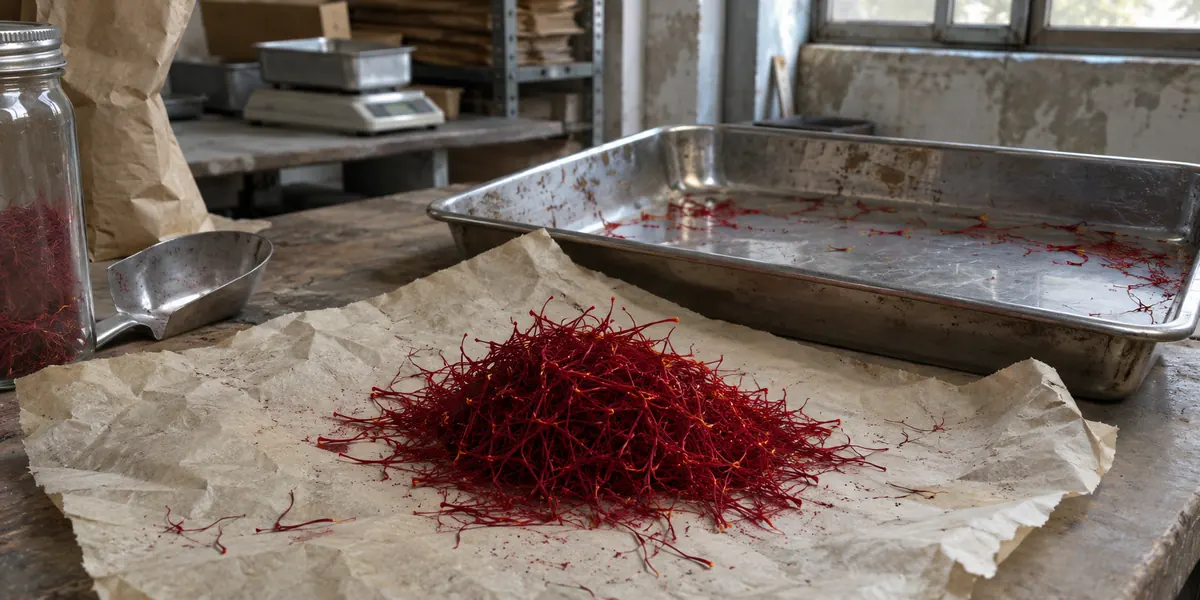
Start with how the saffron will be used
Wholesale saffron buyers often receive offers described with a trade name, a color value and a price per gram. That information is useful only when the offers describe the same product and the same quality basis. A specialty retailer might want visually intact red threads for small glass packs. A food manufacturer may prioritize consistency between lots and accept cut filaments if they meet the formulation requirements.
Start the inquiry by specifying your intended use, target presentation, approximate net quantity and destination. Tell the supplier whether the product will be sold in its original packaging or repacked. That first decision helps determine which appearance, laboratory and labelling checks should be included in the order.
Translate saffron trade names into visible requirements
Names such as Negin, Sargol and Pushal are common in Iranian saffron offers. Sellers may use them to describe differences in thread presentation and the amount of lighter style material. Ask each supplier what the term means in its own offer. Then define the visible requirements your team can assess without depending on that label.
For a whole-thread offer, agree how much breakage and lighter material your buyer will accept. Ask for an unedited close-up with a size reference and a wider view of the actual lot. If the saffron will be sold in a transparent pack, review the appearance in the final presentation, where small differences may be more visible than in a bulk sample.
Powder is a different purchasing format. Ask how the lot is identified and what evidence your quality team needs for identity and composition. Agree the evaluation method before deciding that a powder can substitute for threads in a recipe or finished product.
Specify the ISO edition and the laboratory method
ISO 3632-1:2025 describes requirements for dried saffron in whole filaments, cut filaments and powder. The ISO 3632 series also covers test methods. If a seller offers saffron “according to ISO 3632,” request the exact edition, product form, classification and results. It is easier to compare two reports after confirming that they apply to the same specification and test basis.
The published method uses spectrophotometric readings associated with saffron’s colouring strength, bitterness and aroma. Read those as reported analytical measures, with the correct units and test conditions. For example, a colouring-strength result should not be presented as a percentage of crocin unless the report actually measures that concentration by a method suited to it. Review moisture and other required parameters alongside the headline values.
Use the specification applicable to your contract when interpreting the results. A result copied from an older report may refer to a different edition or classification. Your technical reviewer should confirm whether it can be used for the intended purchase.
Read the certificate of analysis as evidence for one lot
Ask for the lot number, sampling date, testing date, laboratory identity and methods. Check the product form on the report against the product being offered. A laboratory result for powder cannot automatically establish the properties of a separately packed whole-thread lot. Similarly, a report from an earlier harvest may show a supplier's typical reporting but tells you little about the current offer.
Put the results beside your agreed limits in a short review sheet. Record missing values as open questions. If testing has not yet been carried out on the shipment lot, agree who will arrange sampling, when the result must arrive and who can authorize dispatch. Keep a copy of the original report with the lot and packing records.
Evaluate authenticity and sensory quality with appropriate checks
Inspect the sample for thread shape, visible foreign material and overall appearance. If your application depends on aroma or cooking performance, evaluate it with a consistent procedure. Record the sample weight, preparation method, time and other conditions that affect the comparison. A consistent trial is more informative than an informal tasting performed differently for every sample.
Discuss authenticity testing with your laboratory or quality team, especially when buying powder or making a first purchase from an unfamiliar source. Choose methods suited to the potential issue and product form. Home demonstrations with warm water can illustrate how the sample behaves under those conditions, but they cannot establish identity, composition or compliance for a commercial lot.
Keep reference samples labelled and stored under conditions agreed with the supplier. A retained sample gives the buyer and seller a common reference if a later shipment looks or performs differently.
Match the packaging to the distribution channel
For retail orders, specify the net weight per pack, closure, tamper evidence and label requirements. Ask for a sample of the finished package before printing or filling a full run. Check that the net quantity and lot code can be read easily, and identify who signs off the artwork for the destination market.
For bulk orders, confirm the inner packaging, unit weight, outer carton and handling instructions. Discuss protection from light, moisture and external odors across the proposed route. Include how the goods will be stored on arrival and who checks the seal condition before the lot is released. Confirm the applicable storage instructions and shelf-life information for the actual product and pack.
Compare price on the same net-weight basis
Ask whether each quotation is for net saffron weight or includes packaging and services. Convert all offers to the same unit and keep freight, testing and packing costs visible. For example, fifty packs at two grams each represent 100 grams of net saffron. The combined gross weight of the jars and outer carton serves a different purpose in the shipment calculation.
When comparing higher and lower priced options, account for differences in presentation, traceability and test evidence. A loose bulk offer and a lot of sealed retail packs meet different operational needs. Include the cost and work needed to bring each proposal to the same final condition before deciding which one fits.
Prepare a wholesale saffron inquiry
Include the intended use, required thread form, any acceptable trade styles, approximate net quantity and destination. Add your test requirements, preferred pack sizes and sample approval process. If laboratory or regulatory documents are needed for the proposed market, identify them and agree when the responsible party will review them.
Before release, reconcile the sample reference, test report, packing list and shipment lot. Agree who will handle discrepancies and what counts as an approved substitution. A written record helps keep the flavour, appearance and presentation your buyer approved tied to the saffron your receiving team is about to accept.